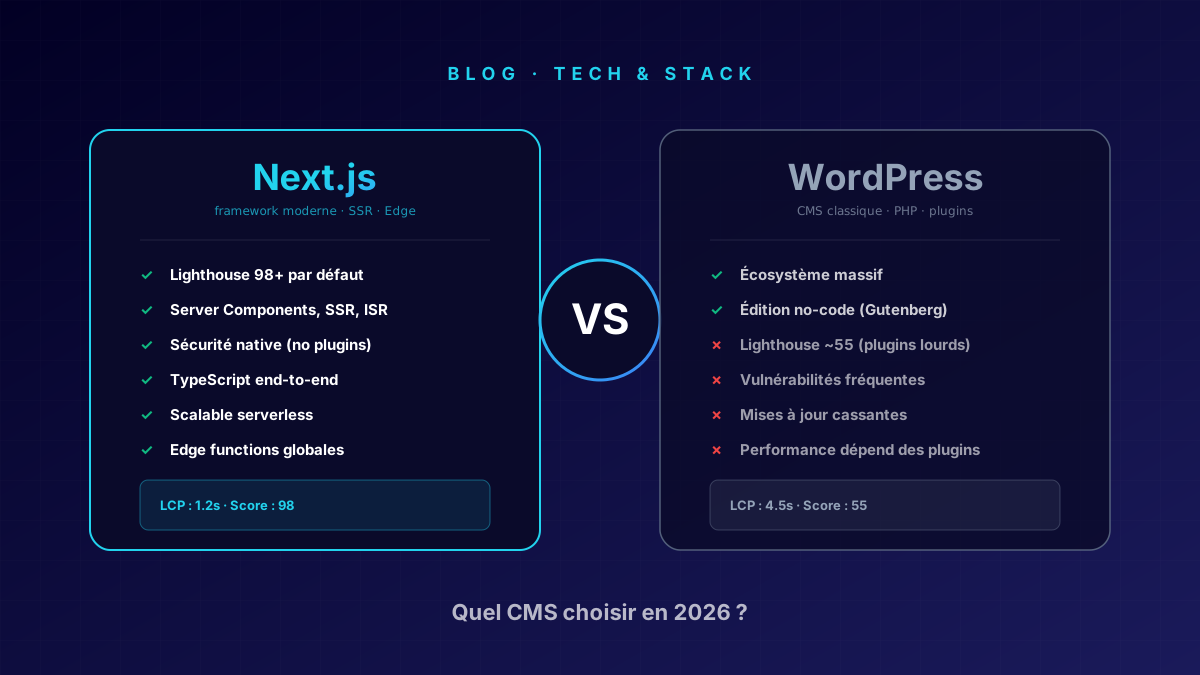
Technology choice is one of the three structural decisions of a digital project. Yet 80% of SMEs still sign a WordPress quote by default, without knowing that a modern stack like Next.js can transform their performance and SEO. This guide honestly compares both options in 2026, with real numbers and the real cases where each one wins.
TL;DR: WordPress remains relevant for blogs, simple sites managed by non-tech editors, and tight budgets. Next.js wins as soon as performance, competitive SEO or scaling become critical.
State of the market in 2026
WordPress still powers 43% of the public web (W3Techs, 2026). It's massive, and it's down to a winning combo: open-source, 60,000+ plugin ecosystem, thousands of themes, and a gentle learning curve for non-developers. But on new B2B and e-commerce projects over €10K, Next.js share grew from 5% in 2022 to over 25% in 2026. On Alexa top 1,000 sites, Next.js now beats WordPress.
Performance: Next.js wins 30 Lighthouse points
On equivalent sites (8-page showcase, 50-article blog, 200-product e-commerce), Next.js consistently delivers better mobile Lighthouse scores. Here are the medians we measure on audits we run for our clients.
| Mobile metric (median) | WordPress + theme | Custom Next.js |
|---|---|---|
| Lighthouse Performance | 55 – 70 | 85 – 98 |
| Largest Contentful Paint (LCP) | 3.5 – 5 s | 1.2 – 2.5 s |
| Total Blocking Time (TBT) | 300 – 800 ms | 0 – 200 ms |
| Cumulative Layout Shift (CLS) | 0.10 – 0.30 | 0 – 0.05 |
| First Input Delay (INP) | 200 – 600 ms | 50 – 200 ms |
| Initial JavaScript weight | 300 – 800 KB | 80 – 200 KB |
Why the gap? WordPress assembles the page server-side in PHP on each visit, loads jQuery plus dozens of plugin scripts, and ships unpurged CSS. Next.js pre-renders pages at build time (SSG), ships only the strictly necessary JS (React Server Components), and purges CSS automatically via Tailwind. It's an architectural difference, not an optimisation detail.
Technical SEO: Next.js has the structural edge
On pure technical SEO, both can achieve good results — but Next.js starts with a structural lead. Key points below.
- Core Web Vitals: a Google ranking factor since 2021. Next.js passes them green natively; WordPress needs 5-10 caching and optimisation plugins.
- Static Generation (SSG) + Incremental Static Regeneration (ISR): pages served from the CDN in <50ms vs WordPress's 200-800ms typical TTFB.
- Multilingual sitemap, hreflang, schema.org: trivial in Next.js; needs RankMath or Yoast on WordPress (and their Premium tier costs €100-200/year).
- Dynamic Open Graph (on-the-fly image generation): `next/og` is native. WordPress needs a plugin and stays limited.
- Performance budget: Next.js can audit bundle size on each commit. WordPress can't.
The CodingArt site itself runs on Next.js 15, with a performance budget tracked on every deploy. The same page in an equivalent WordPress would typically cost ~30% more mobile 4G load time.
Security: a massive difference
WordPress is the #1 target of web attacks worldwide — roughly 40,000 WordPress sites are compromised every month in 2026. The root cause isn't WordPress itself but the ecosystem: 60,000 plugins maintained by 30,000 independent developers. A flaw in any active plugin exposes the site. Typical attacks: script injection (XSS), fraudulent redirects, credential theft, ransomware on files.
Next.js doesn't have this attack surface. No exposed PHP database (unless you explicitly add one), no third-party plugins to update, no admin panel open to the world. Source code is versioned, audited, deployed via CI/CD. It's an order-of-magnitude difference in operational risk.
3-year Total Cost of Ownership (TCO)
Here's a real TCO comparison for a 15-page corporate showcase, based on actual quotes and invoices from our clients over the last 2 years.
| Item over 3 years | WordPress | Next.js |
|---|---|---|
| Design + initial dev | €4,000 – 8,000 | €6,000 – 12,000 |
| Cumulative hosting | €300 – 900 | €300 – 1,800 |
| Premium plugins/themes licences | €300 – 900 | €0 |
| Cumulative technical maintenance | €2,400 – 7,200 | €1,200 – 3,600 |
| Cost of a security incident (statistical) | €1,500-5,000 × p(40%) | ≈ €0 |
| SEO audit + perf optimisation | €1,500 – 4,000 | Often included |
| TOTAL 3 years (median) | ≈ €12,000 – 22,000 | ≈ €9,000 – 17,000 |
WordPress looks cheaper upfront but the 3-year TCO often runs higher due to maintenance, recurring licences and security risk. For a business-critical site, Next.js pays off from year 2.
When to pick WordPress in 2026
- You run an editorial blog with 1-5 non-tech contributors who must publish themselves.
- Your total budget is under €3,000, content included.
- You want a generic site (template + tweaks), with no strong performance demand.
- You depend on a critical plugin ecosystem (LearnDash, WooCommerce with 30+ extensions, MemberPress…).
- You already know you'll rebuild the site in 2-3 years anyway.
When to pick Next.js in 2026
- SEO is critical: you compete on tough keywords where every Lighthouse point matters.
- You plan to scale: growing traffic, multilingual, multi-country, parallel mobile API.
- User experience must feel premium (smooth animations, transitions, interactions).
- You have a SaaS product, business platform, marketplace or custom e-commerce.
- Security is non-negotiable (health, finance, sensitive data, public sector).
- You have an in-house dev team able to maintain a modern stack.
What about hybrid setups?
An elegant option: Next.js front-end + WordPress as a headless CMS (via WPGraphQL or REST API). You keep WordPress admin for editors and Next.js performance for visitors. The trade-off: higher initial cost (+15-30% vs pure Next.js) and operational complexity. Relevant for large content publishers.
Our recommendation at CodingArt
In 2026, we start 80% of new projects on Next.js. The remaining 20% are sites with heavy editorial needs where we ship an optimised WordPress (cache, CDN, premium hosting, audited plugins) or a headless setup. If you're unsure, ask us for a comparative audit: we scope your need on both stacks and you decide informed.
Want a take on your project? Describe it in 5 minutes through our quote form. We'll propose the stack that serves your business — not the one that suits us.
Tags